Six sentences we hear all the time, and what we build in response.
If one of these sounds like your business, the fix is usually smaller and faster than you'd expect. Each one below shows the situation, what gets built, and what changes afterwards.
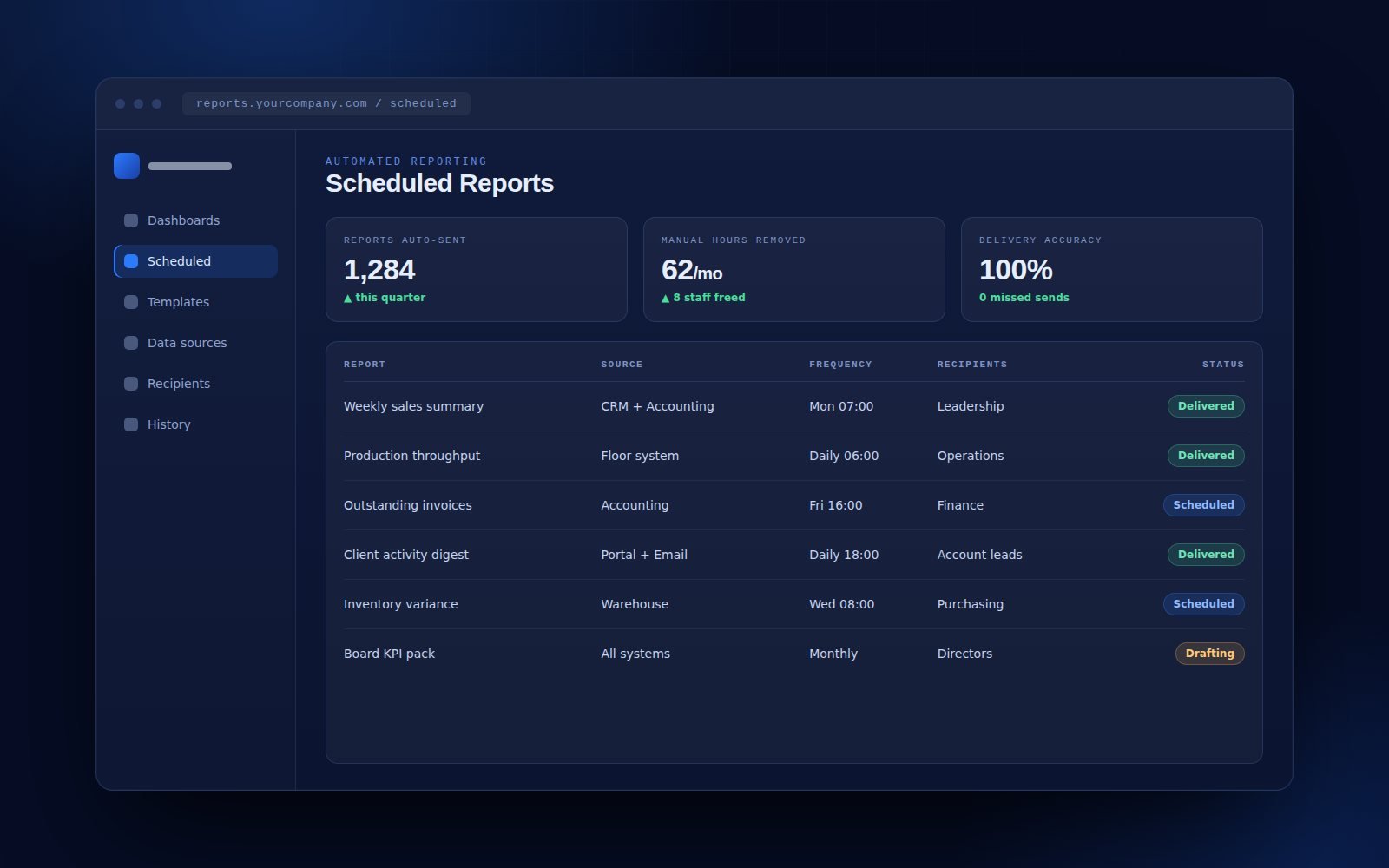
The report builds itself before anyone arrives
Someone on your team exports from two or three systems, pastes it into a spreadsheet, fixes the formatting, checks the totals and emails it round. Every week. It takes half a day, it's error-prone, and it stops entirely when that person is on holiday.
What we build
- Scheduled jobs that pull directly from your source systems
- Your existing report layout, rebuilt as a template
- Automatic delivery by email, Slack, or a live dashboard
- Validation rules that flag anomalies before the report goes out
- A full history so you can compare any two periods
The answer is already waiting for them
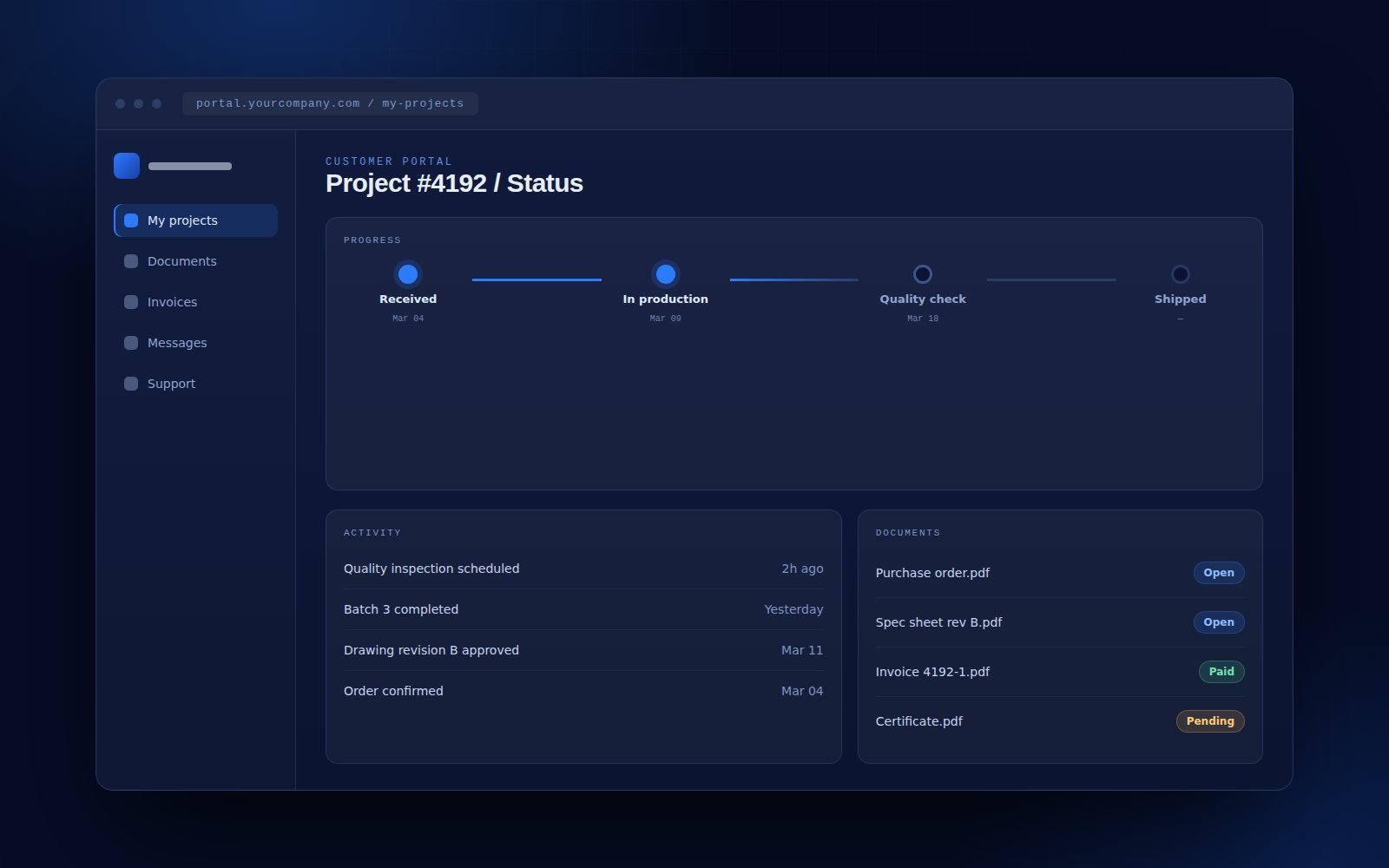
Every status call costs someone fifteen minutes: find the job, check with the team, call back. Multiply that across a week and it's a part-time role. Meanwhile the customer feels like they're chasing you, which is not the impression you want to leave.
What we build
- Secure client logins with the right permissions per account
- Live status timeline pulled from your internal systems
- Documents, drawings, certificates and invoices in one place
- Messaging that keeps the whole thread on the record
- Email notifications so clients don't need to check
Keep the logic. Lose the fragility.
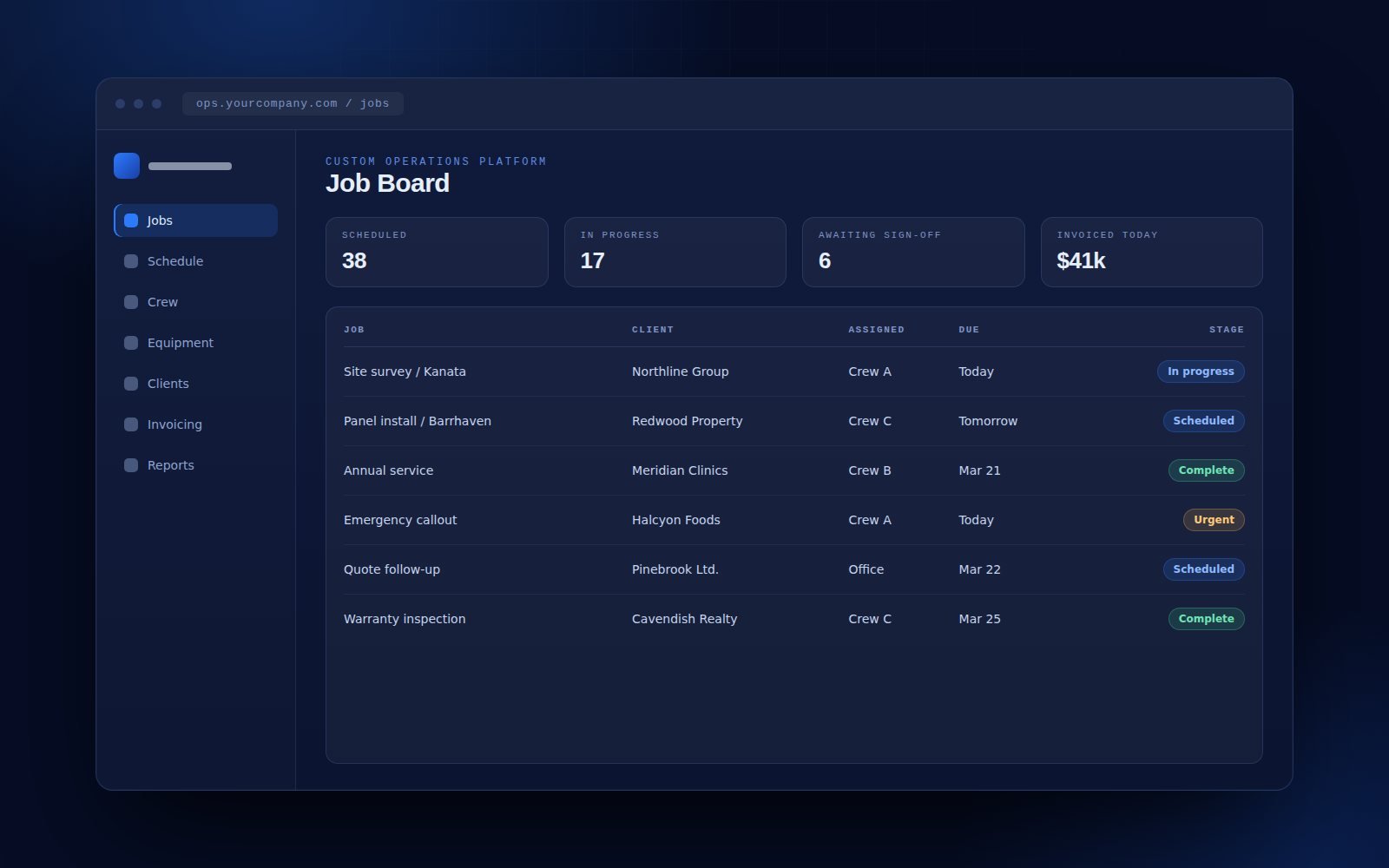
The spreadsheet got you here, and that's worth respecting, because it encodes years of hard-won process. But now three people need it at once, one wrong paste breaks a formula nobody remembers writing, and there's no history of who changed what.
What we build
- Your workflow rebuilt as a proper multi-user application
- The same logic and calculations, now protected and tested
- Roles and permissions so people see only what they should
- Change history and audit trail on every record
- Built-in reporting instead of another export
- Existing spreadsheet data migrated across
Enter it once. It shows up everywhere.
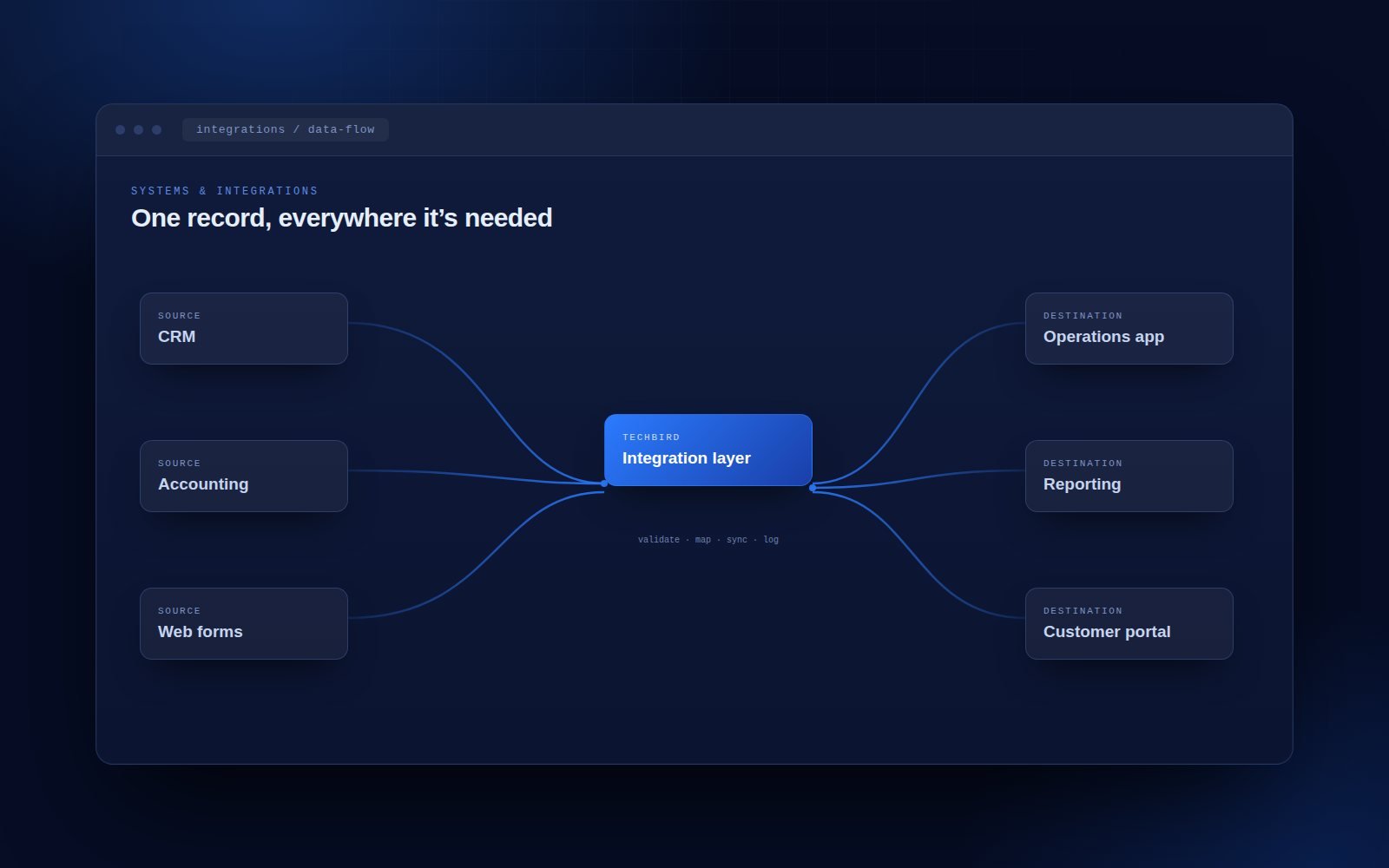
A new customer gets typed into the CRM, then the accounting package, then the job system. Three chances for a typo, three versions of the truth, and a monthly argument about which one is right.
What we build
- An integration layer between your existing systems
- Field mapping and validation so bad data never lands
- One-way or two-way sync, with conflict rules you choose
- Alerts when something fails, so nothing breaks silently
- Complete logs of every record that moved and when
- Support for legacy systems via exports or scheduled files
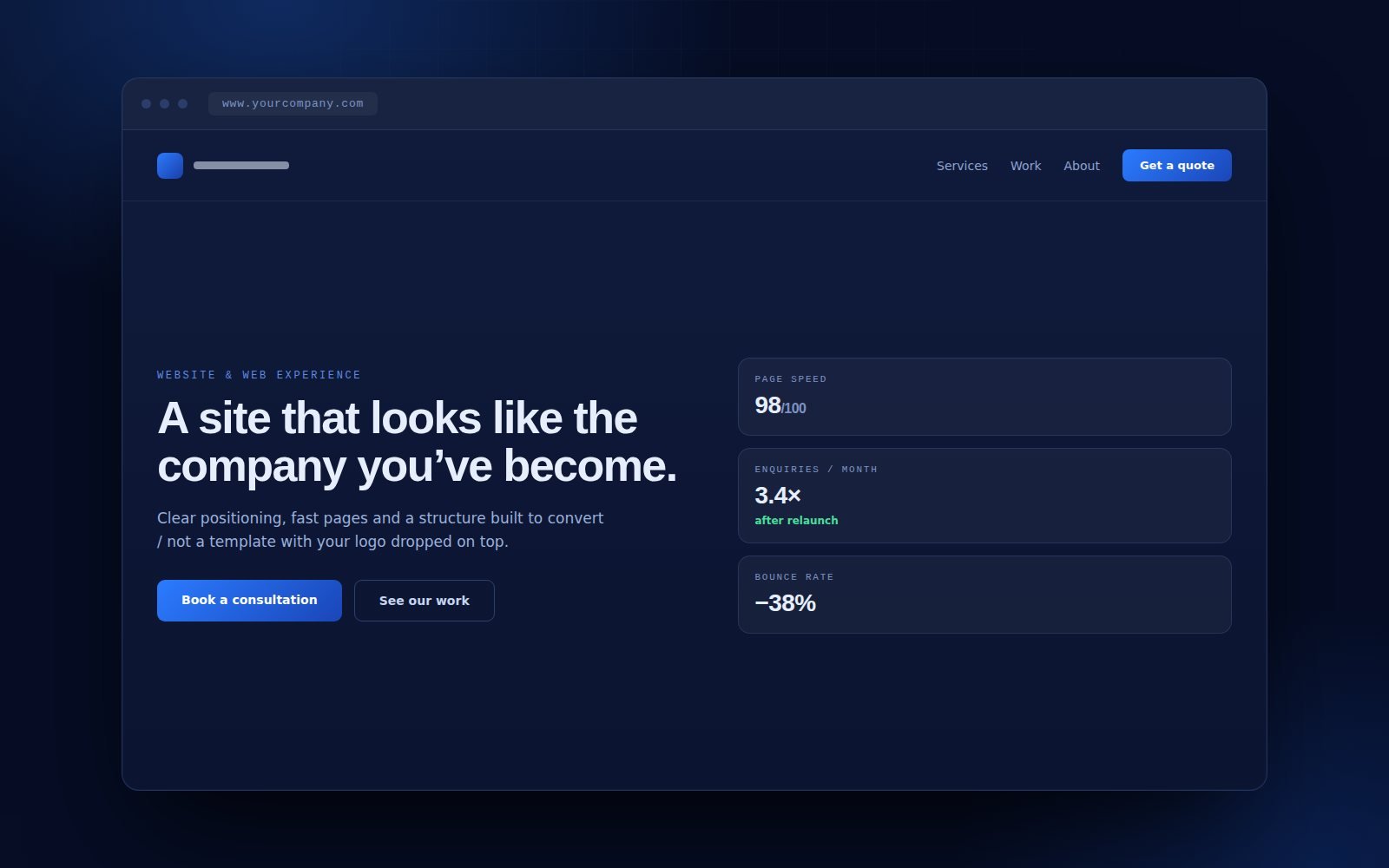
Look like the company you are now
The site was built when you were half the size, doing half of what you do today. It still describes services you've dropped, misses the ones that now pay the bills, and quietly costs you credibility with every serious prospect who checks you out before replying.
What we build
- Positioning and messaging worked out before design starts
- A custom design built around your brand, not a template
- Page structure aimed at how people actually search
- Fast, accessible pages that pass Core Web Vitals
- An editing setup your team can use without calling us
- Analytics and lead tracking configured from launch
Find out if it works before you bet the year on it
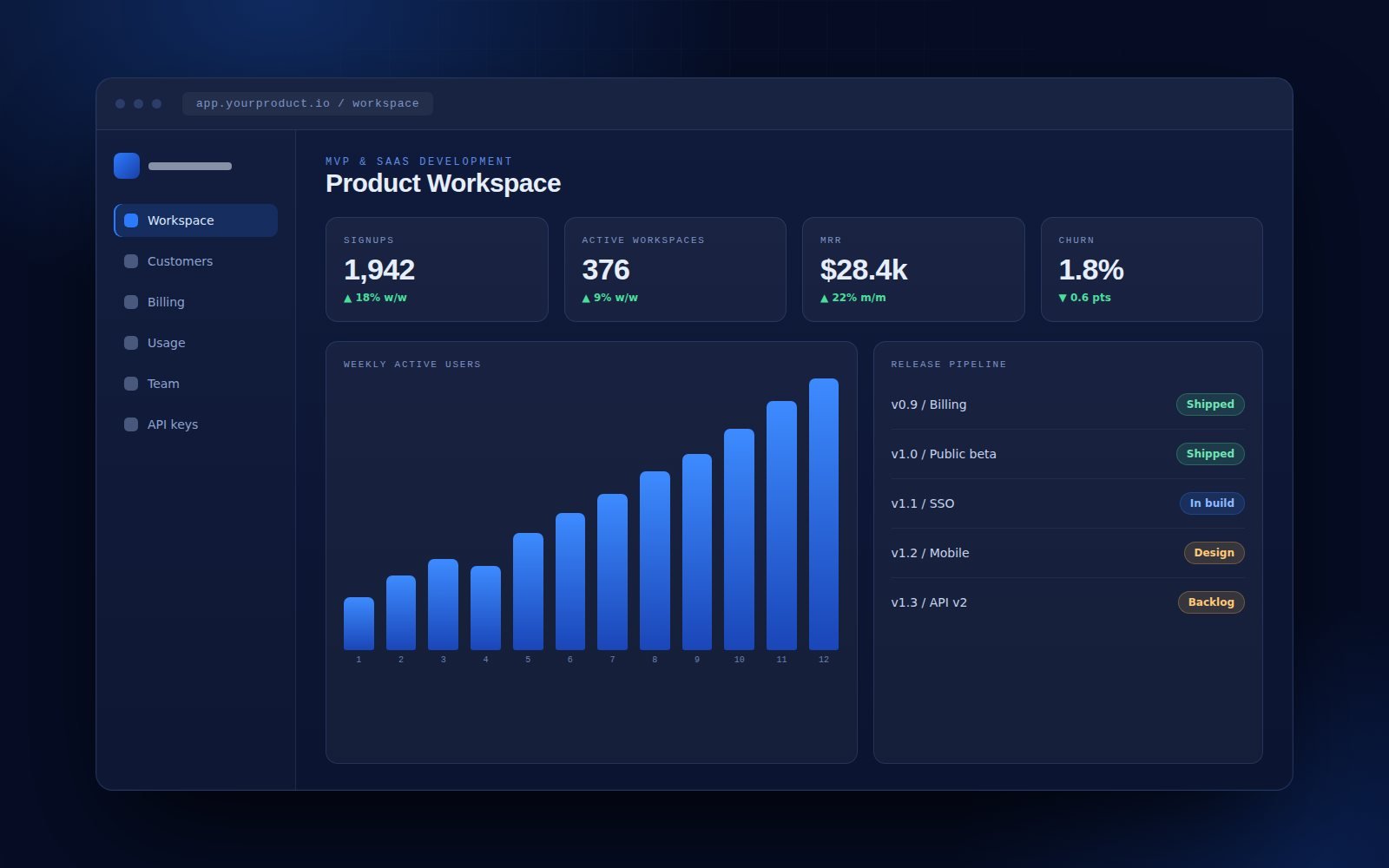
The idea is good. The risk is building twelve months of features before a single customer has tried it. The job of a first version isn't to be complete. It's to teach you something true, quickly and cheaply.
What we build
- Scope reduction: the smallest version that proves the idea
- Accounts, permissions and multi-tenant structure done right
- Subscription billing wired in from the start
- Usage analytics so you learn what people actually do
- Architecture that can grow without a rewrite
- A release plan for what comes after launch
Your problem doesn't have to be on this list.
These are simply the six we're asked about most. If the work in your business feels repetitive, scattered across too many places, or dependent on one person knowing the trick, then it's the same class of problem, and it's solvable.